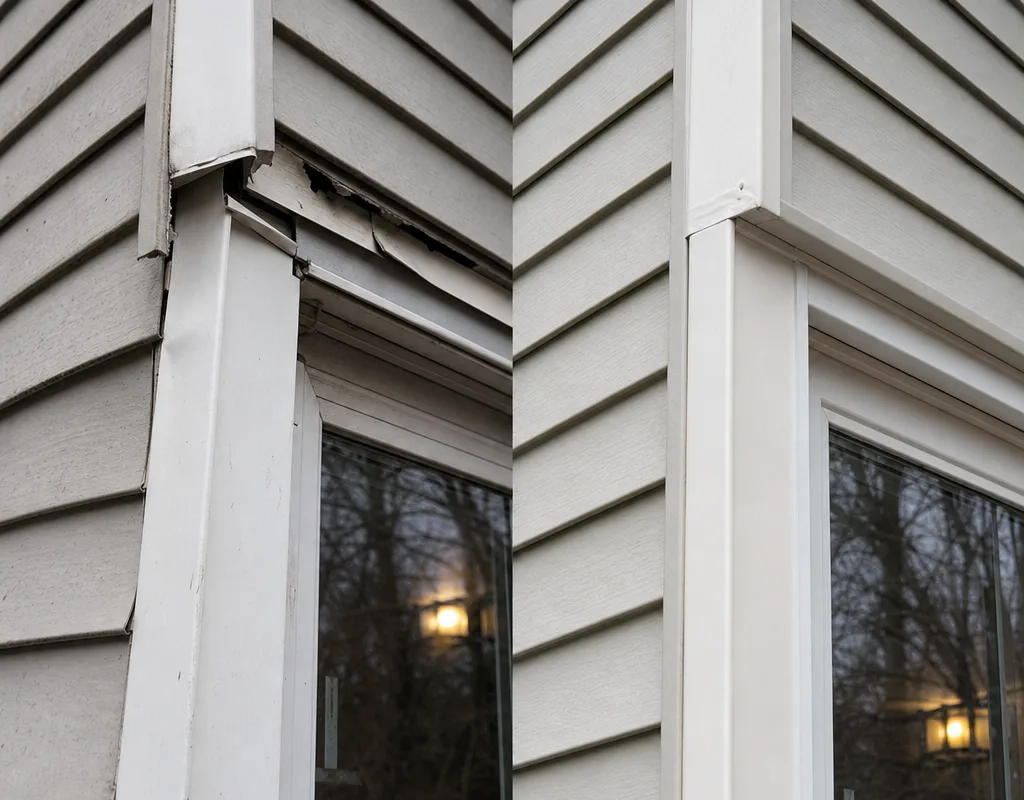
Loose or missing panels
Re-secure or replace wind-damaged pieces, restore locking edges, and correct fastening where nails were driven too tight or too loose.
Serving Fredericksburg, Virginia & surrounding areas
Mon–Fri 8am–6pm · Sat 9am–2pm
Stop leaks, loose panels, and rot before they spread. Get a clear inspection, a written scope, and repairs that match your existing siding and trim.
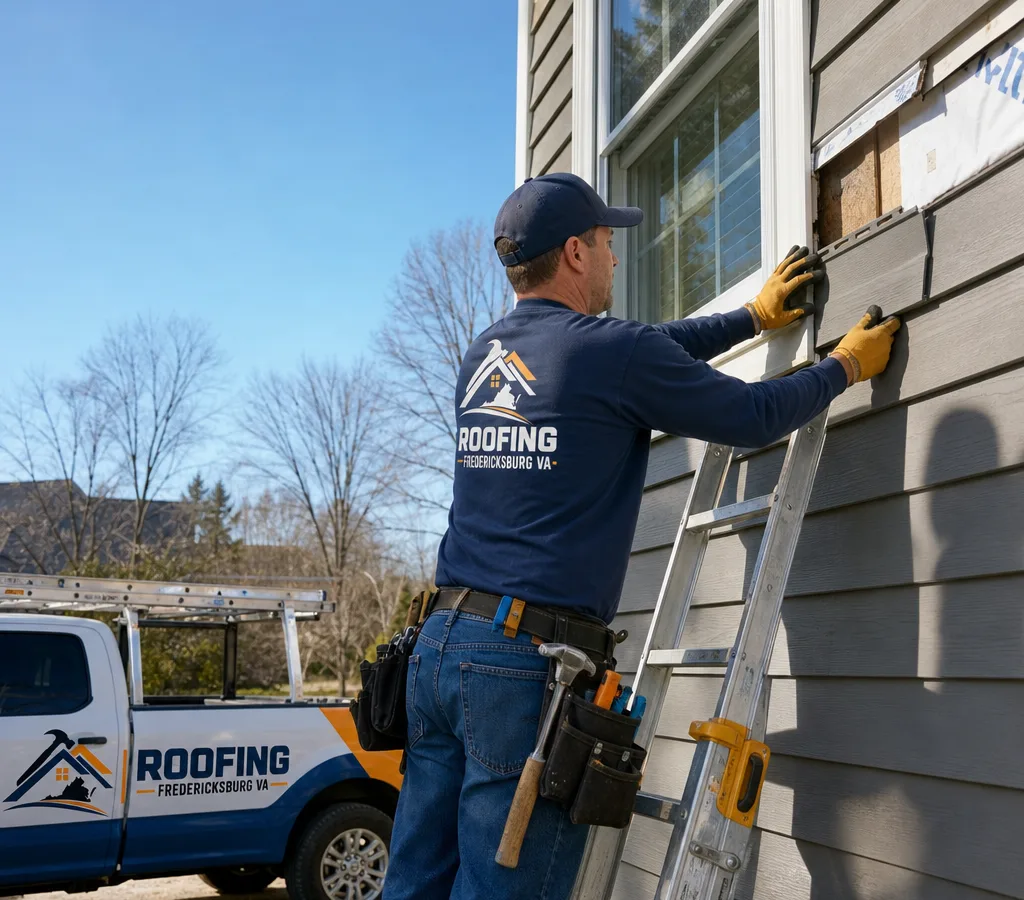
If you are searching for siding repair Fredericksburg VA, it usually means something already looks off: a panel is warped, a corner is flapping in the wind, paint is bubbling, or you are seeing moisture around a window or trim board. Siding is your first layer of protection, but it is the water-management details behind it—flashing, housewrap, and properly sealed penetrations—that keep framing and sheathing dry.
The problems we are typically called out for in Fredericksburg include:
Small siding failures often show up far away from the real entry point. A leak can travel along the water-resistive barrier or sheathing before it stains drywall. That is why our repairs start with locating the path of water, not only swapping a panel and hoping for the best.
Roofing Fredericksburg VA handles siding repairs as focused exterior fixes: identify the cause, repair damaged materials, and restore the details that keep water moving out and away.
A lasting repair is more than making the damage look better. We treat siding as part of a system that includes flashing, trim, and ventilation.
For most repair visits, you can expect:
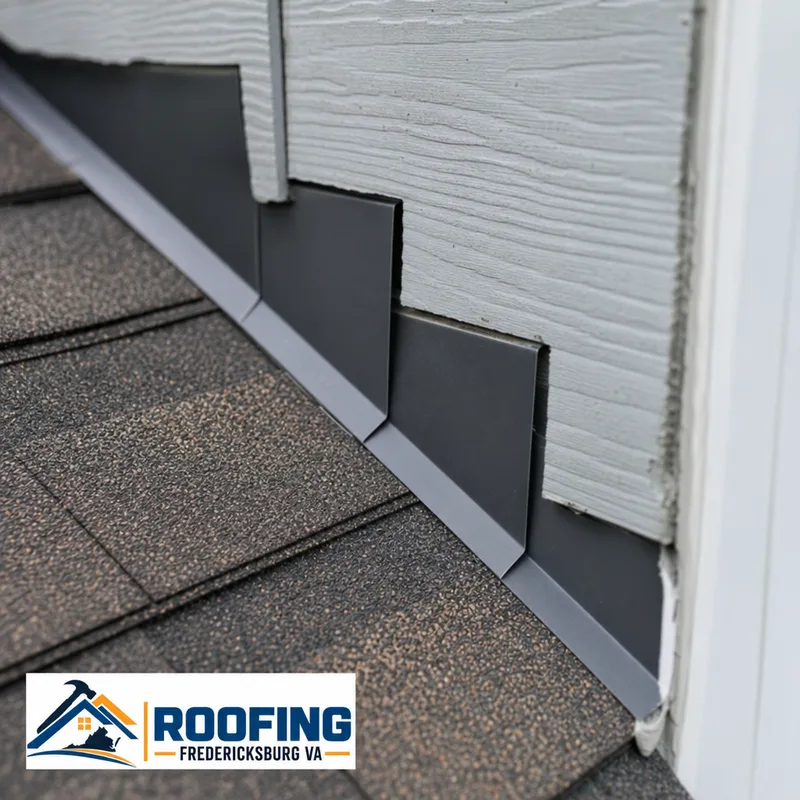
If an issue traces back to a roof-to-wall water detail, our team can address it as part of a coordinated exterior fix. Siding and roof details must work together at common leak points.
Re-secure or replace wind-damaged pieces, restore locking edges, and correct fastening where nails were driven too tight or too loose.
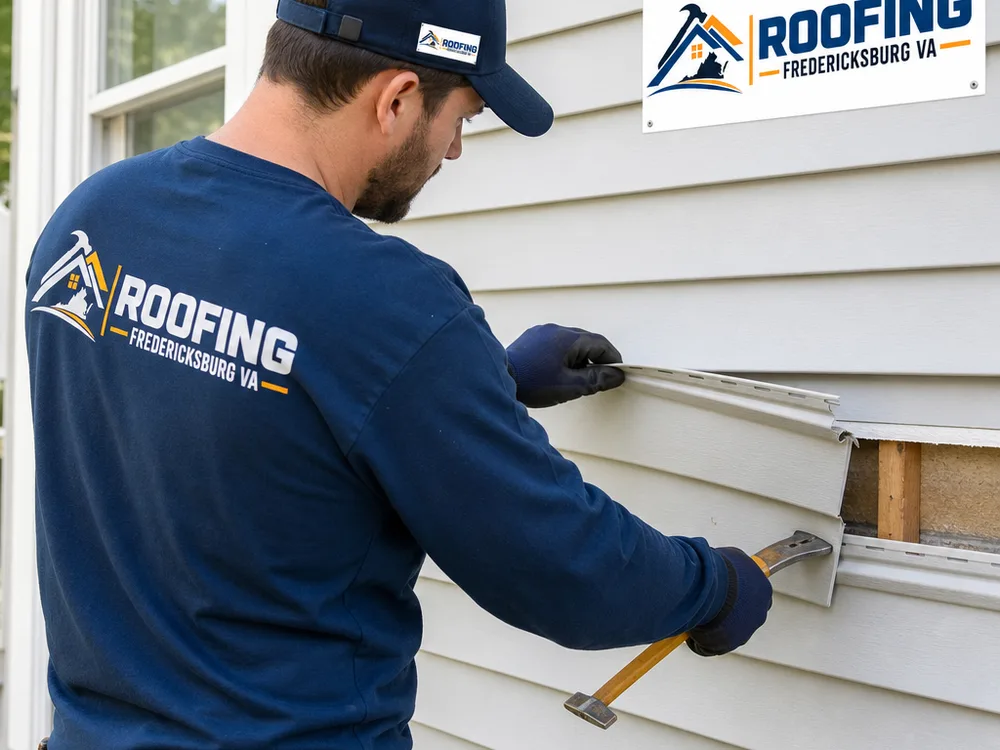
Swap affected courses, check the substrate behind the damage, and keep the repair aligned so the wall drains properly.
Repair siding and trim around openings and correct head flashing, end dams, and integration with the water-resistive barrier.
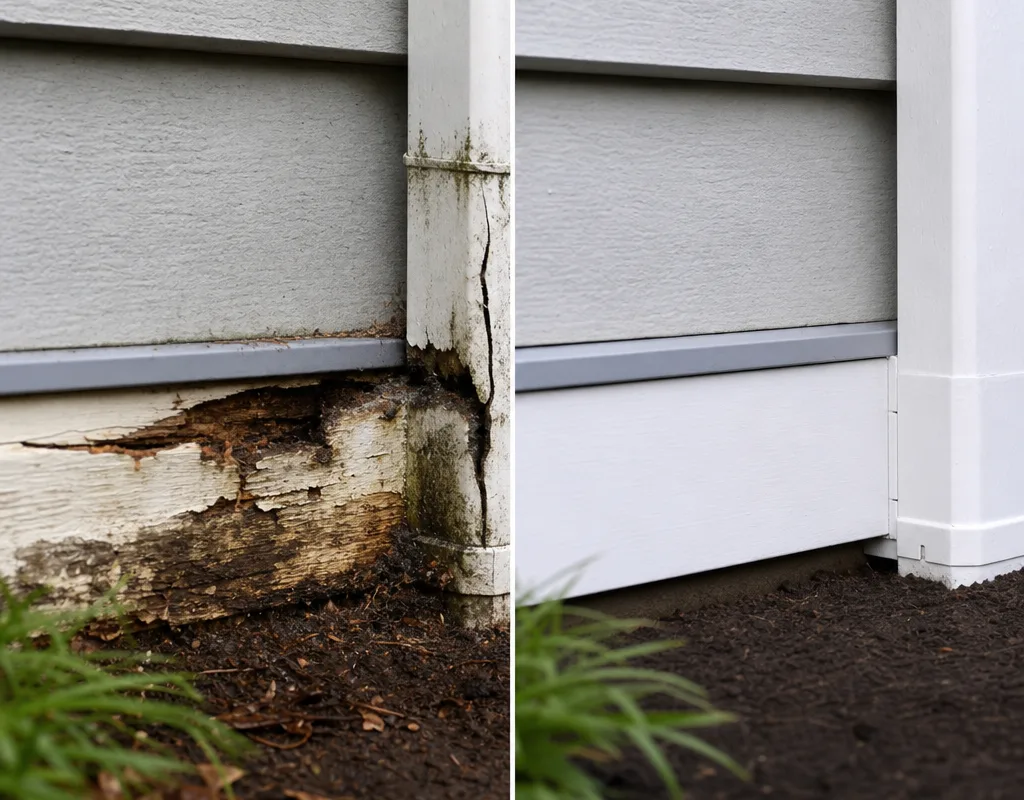
Remove compromised wood, install appropriate exterior-grade materials, and correct the drip or runoff conditions causing repeat wetting.
Close openings at returns, corners, and penetrations with proper accessories instead of random patches.
When only one elevation needs work, we can focus the scope on that area while keeping courses straight and transitions neat.
Fredericksburg's weather swings matter on exterior materials. Hot, humid summers and winter freeze-thaw cycles can open small gaps over time, especially around fasteners, corners, and penetrations. Wind-driven rain is another major factor. When rain hits a wall at an angle, it tests every overlap, flashing edge, and seal.
We also see many repair needs driven by transitions rather than broad wall surfaces. These are the places where different trades meet and details get missed: roof-to-wall lines, deck attachments, porch roofs tying into walls, and older window installations. We take extra time around those junctions because that is where repeat problems often originate.
You do not need a whole re-side to solve most issues. Many Fredericksburg homeowners only need targeted repairs, replaced trim, and corrected water details to protect the structure and keep the exterior looking consistent.
We look beyond visible damage to find the moisture path or mechanical failure that caused it, including nearby transitions and penetrations.
You get a straightforward plan spelling out what will be removed, replaced, and rebuilt, including flashing, trim, and accessories.
We replace damaged siding and trim, follow correct fastening and expansion requirements, and keep lines straight so the repair blends in.
Where needed, we integrate flashing and water-resistive barrier repairs so water moves out rather than into the wall assembly.
We remove debris, confirm there are no loose edges or exposed gaps, and review maintenance tips for the repaired area.
Most siding repair projects in Fredericksburg typically range from about $250 to $1,500, depending on how much siding and trim must come off and what is found behind it. Small fixes such as reattaching loose panels or replacing a few pieces often fall on the low end, while leak-related repairs around windows, corners, or roof-to-wall transitions can run higher.
Final cost depends on access and height, siding type and availability, the need to replace water-resistive barrier or flashing, and any substrate damage to sheathing or framing. The exact price is confirmed after an on-site inspection and a written scope.
Often yes, but exact matches depend on the siding line, age, and sun fading. We identify the profile and material, then source the closest available match. If an exact match is unavailable, we explain options such as replacing a full elevation, choosing complementary trim, or locating the repair in a less noticeable area.
It can be, because one crack can let wind-driven rain reach the water-resistive barrier and sheathing, particularly around corners and openings. If it is near a seam, loose at the lock, or accompanied by staining or soft trim, prompt repair can keep moisture from spreading.
We look for soft trim, bubbling paint, recurring caulk failure, staining, and siding that will not stay flat, then remove only what is necessary to verify the substrate. A proper inspection checks sheathing, flashing, and water-resistive barrier integration—not only the siding face.
Small, like-for-like repairs often do not, but broader exterior or structural substrate work may require permitting. If the scope expands, we will discuss what City of Fredericksburg or Spotsylvania or Stafford County requirements may mean for the address before work moves forward.
Many repairs are completed in a single visit, while leak tracing and work involving windows, trim replacement, or substrate drying can take longer. Timing depends on access, the number of courses removed, and whether matching materials must be ordered.
Yes. Roof-to-wall transitions are common leak points, so we focus on step flashing, kickout flashing where applicable, and proper integration with the wall's water-resistive barrier so water sheds outward instead of entering the wall.
Tell us what you are seeing, where it is happening, and whether there are signs of water inside. We will schedule an inspection, confirm the cause, and provide a written repair plan that protects the wall, not just the surface.